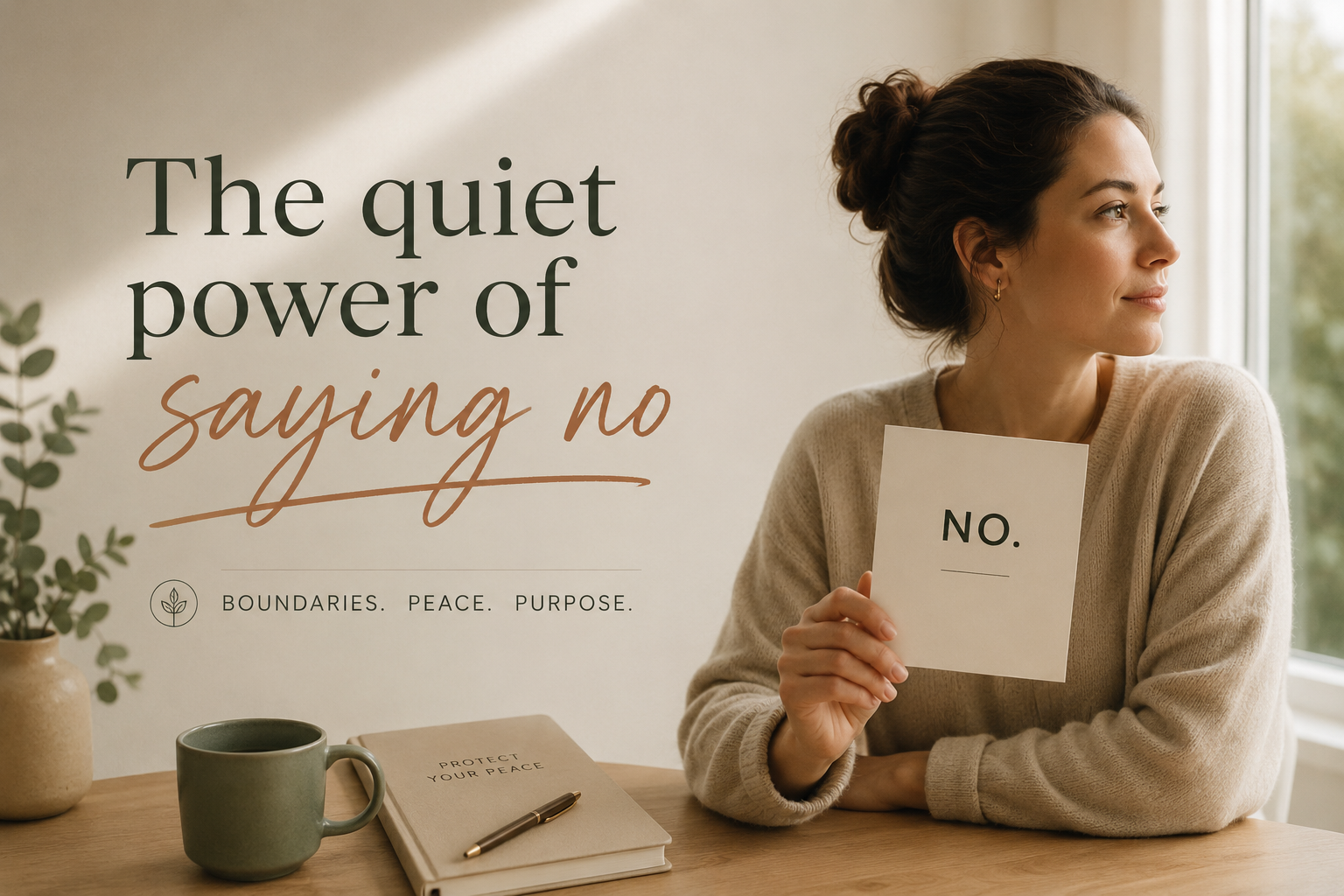
Nobody tells us that “no” is a complete sentence.
They teach us to soften it. I’m so sorry, I can’t make it. I’d love to, but I’m really swamped. We’ve been trained to wrap our no in so much apology that by the end of it, we’ve practically talked ourselves into saying yes.
And so we say yes. Again.
Why We Can’t Stop Saying Yes
Think about the last time you agreed to something and immediately felt a small drop in the stomach. That’s your gut telling you no.
We often say yes because saying no feels selfish. Because we’ve spent so long being the reliable one, the flexible one, the of course, no problem one – that we’ve forgotten we’re allowed to be unavailable.
And then we wonder why we’re so tired.
Every Yes Has a Hidden Cost
Here’s what nobody talks about: every yes costs something. Our time. Our energy. Our attention.
When we say yes to something we don’t mean, we’re not being generous. We’re spending our future selves’ resources — the version of us that has to show up, go through the motions, and come home hollowed out.
No is not the absence of generosity. No is what makes our yes mean something.
Why Saying No Feels So Wrong
Saying no feels like letting someone down. And sometimes it does – that part is real.
But here’s what usually happens: the world doesn’t end. The relationship doesn’t collapse. The person figures it out.
And we feel something unfamiliar on the other side. Not guilt. Something quieter. Something that feels a lot like self-respect.
That discomfort when holding a boundary isn’t a sign we’re doing something wrong. It’s just proof we’ve been saying yes for a very long time.
How to Start Setting Boundaries (Without Blowing Up Our Lives)
We don’t have to start with the big ones. Start with the thing you agreed to last week that you’re already dreading. Send the message. Keep it short.
I won’t be able to join. Hope it goes well.
That’s it. No five-paragraph apology. No explanation.
Notice what comes after the initial guilt spike – that quiet steadiness underneath. That small, unremarkable, quietly powerful feeling of having chosen yourself, once, on purpose.
That’s where it starts.
Leave a Reply